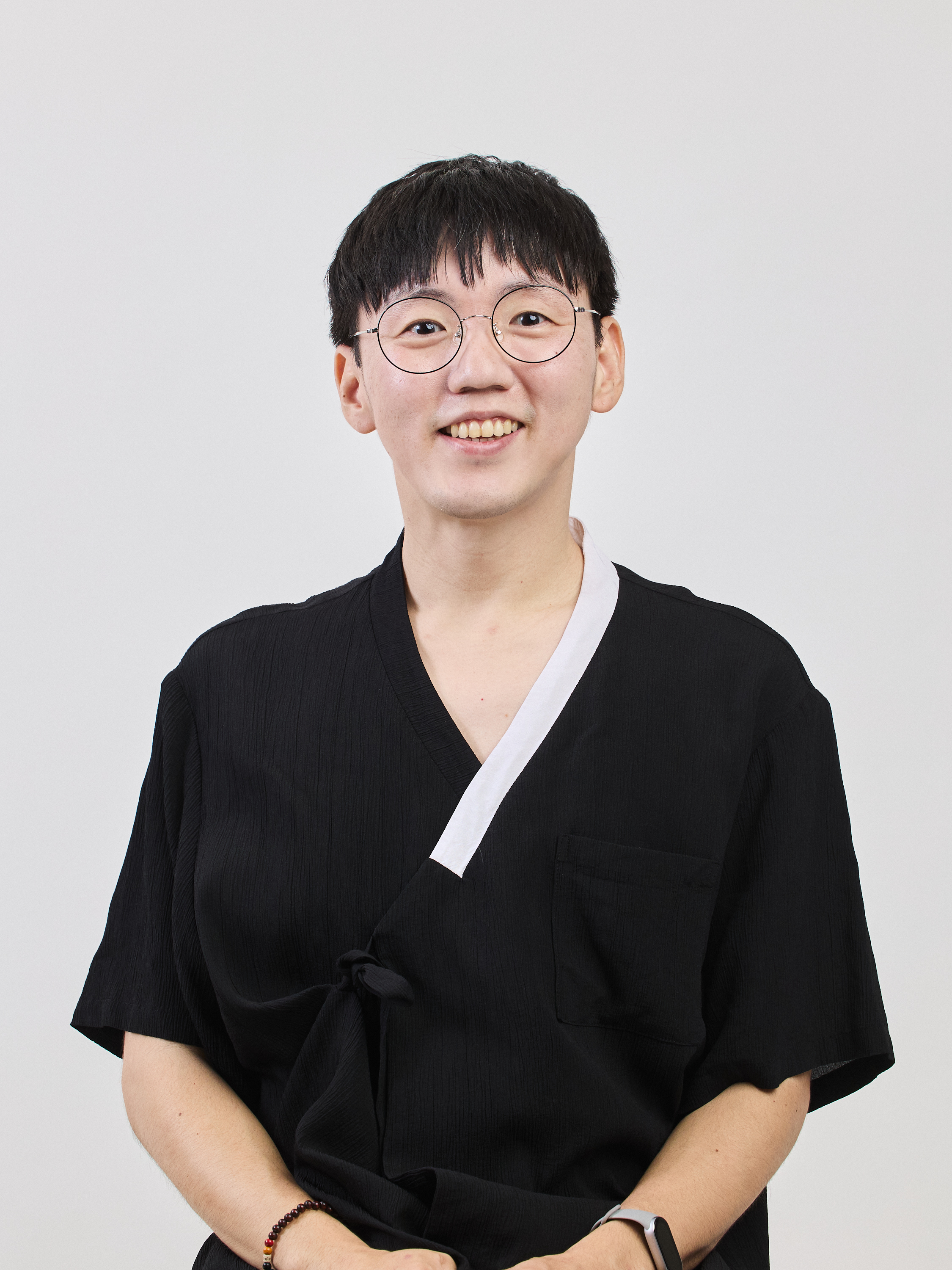
Billy Seol
Ex-Apple/Disney engineer turned Buddhist life coach, and I build my own AI.
My topic for this season: what a human is for when the machine can do the work.
The Post-AI Human Being
I sit in two chairs almost nobody sits in at once: a Buddhist life coach who still builds his own AI systems from scratch. That vantage point is where my current work comes from.
When AI can do the producing, and soon the coordinating too, the old sources of human worth (your output, your competence at logistics) get commoditized. What’s left is the one thing that can’t be automated: a defined self. Your judgment, your taste, your trustworthiness, your sense of what you’re actually about.
Automation doesn’t shrink the human. It removes our hiding place. The people who did the inner work thrive; the people who used busyness to avoid the self-question get exposed. That’s not a warning about AI. It’s a description of what a human is now for.
The Post-AI Human: what are we for when the machine can do the work?
The core thesis. Why the defined self is becoming the one uncommoditizable skill, and what that means for how you work and live.
AI removes your hiding place: why automation exposes the self
When the logistics are automated, all that’s left between people is judgment, taste, and trust. The ones who avoided the self-question get found out.
Why “me and my AI” hits a ceiling: the new rules of human cooperation
As individuals get more powerful, the stakes of working together rise. Collaboration shifts from pooling labor to combining selves, and that changes who is worth working with.
What I’d tell a terrified new grad in the AI job market
Coding genius isn’t the edge anymore. The rising differentiators are judgment, using AI well, and the ability to actually work with people.
The two responsibilities of using AI, from a coach who builds his own
The technical responsibility of knowing how to wield it, and the human responsibility of not letting it think for you. One without the other fails.
Also happy to go deep on the Karmic Formula System, my mathematical framework for procrastination, shame, and self-sabotage, and how it connects to the post-AI human.
Ready-made angles for your episode.
- Your big idea is “the post-AI human.” What are humans actually for when AI can do the work?
- What do you mean when you say AI “removes our hiding place”?
- If I have AI, why would I still need to collaborate with another person?
- You told new CS grads that being a coding genius isn’t enough anymore. What is enough now?
- What does it mean to “know what you’re about,” and why is that suddenly an economic skill?
- How does chasing external validation break down collaboration in the AI era?
- You split “using AI well” into a technical responsibility and a human one. What’s the difference?
- As a Buddhist coach who builds his own AI, where does compassion fit into all this?
A selection of 10+ appearances.
I spent a decade as a software engineer at Apple, Disney, and Foursquare, with a CS degree from Cornell. Then I left to train under Buddhist teachers and became a Buddhist life coach. Today I still build my own AI systems from scratch, which is why I can talk about the machine and the human in the same breath.
I’ve written 1,300+ public coaching responses and three books, and I created the Karmic Formula System, a set of equations for why people stay stuck. I don’t pitch products on shows; I coach. If your audience brings a real problem, I’ll work it with them live. That tends to be the best part of the episode.
Let’s make an episode your audience references for months.
Email me with your show name, your audience, and a rough date. I record remotely with good audio and video, and I’m easy to schedule.
Prefer another angle? I also speak on procrastination, shame, and the Karmic Formula System, and on the tech-to-Buddhism career arc. Just say the word in your email.